
When Your Child Does Something Wrong at School
The Principal's Perspective
Sooner or later, most parents get the call. Your child pushed someone, copied a classmate's work, or said something unkind. Children are still growing, and at some point every child does something wrong.
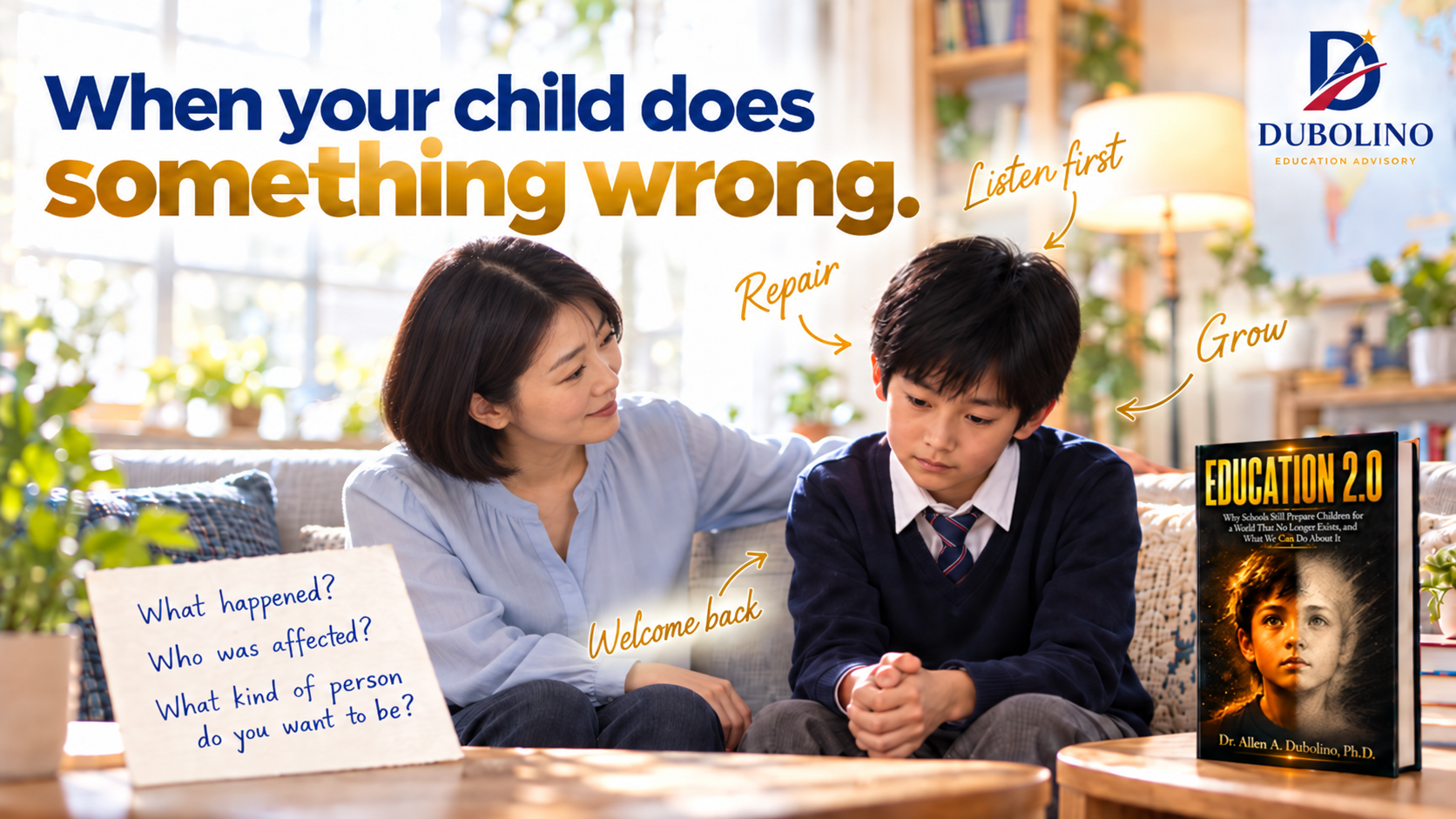
In Education 2.0, Dr. Allen Dubolino argues that what matters most in that moment is what kind of school is on the other end of the line. One school calls to report a punishment and close the matter. Another calls to begin a process with you, one that helps your child understand what they did and grow from it.
Both schools may give the same consequence. What happens to your child afterward can be very different.
The question most discipline systems ask
Most school discipline is built around one question: how do we stop this from happening again? The tools that follow are detention, removal and escalating penalties.
Stopping harmful behavior matters, and the book is clear that a school without consequences isn't kind, it's negligent. But when punishment is the only response, children often learn to avoid getting caught rather than learning why something was wrong.
The book suggests a different question: who does this child need to become, and how can this moment help them get there?
A child is often never more open to becoming someone better than right after they've done something wrong.
Consequence and growth, together
Debates about discipline usually split into two sides. One says schools need firmer consequences. The other says children need more understanding. The book's answer is that both are right, and a good response always includes both.
There is a clear, fair consequence, because actions have weight and the school community needs to feel safe. Alongside it, the child is helped to understand what happened, repair the harm, and change. Consequence without growth is just punishment. Growth without consequence has nothing behind it.
A conversation you can use at home
At the center of this approach is a calm conversation between the child and an adult who cares about them. It isn't a lecture. The adult asks questions and lets the child do the thinking, because an understanding a child reaches on their own is one they keep.
What happened?
Let your child describe it without interrupting. Saying it out loud helps them look at the event instead of just reacting to it.
What were you thinking at the time?
This isn't about excusing the behavior. A child who can name what drove them is starting to understand themselves.
Who was affected, and how?
This is the step punishment usually skips, and it's where empathy starts. The child is helped to see the other person and what they experienced.
What needs to happen to make this right?
Once the child understands the effect of what they did, the conversation turns toward repair.
What kind of person do you want to be next time?
The final question points the child toward the future, not the past.
The book describes an eleven-year-old who had pushed a younger classmate. When he was asked who had been affected, his voice cracked. He hadn't realized the younger boy had been too upset to focus for the rest of the morning. That moment taught him more than a detention would have.
Why children need a way back
In this kind of school, a child can always earn their way back. The consequence is real, but it isn't permanent. Once the child has repaired the harm and shown real change, they return fully to good standing.
Some parents worry this makes consequences too soft. The book argues the opposite. A child who believes their worst moment is now who they are has no reason to try. A child who knows the work leads somewhere has every reason to do it.
What to ask a school
A school's approach to discipline says a lot about how it sees children. These questions can help you find out.
- What happens when a student does something seriously wrong?
- Is there a conversation with the student, or only a consequence?
- How are parents involved when something goes wrong?
- How does a student return to good standing afterward?
Your child will make mistakes. A good school treats those moments as a chapter in your child's story, not a verdict on who they are.
Dubolino Education Advisory
Looking for a school that helps children grow?
We help families in Japan and Thailand find schools that fit their children. Get in touch if you'd like help thinking through your options.
Dr. Allen A. Dubolino, Ph.D., is Head of School at Four Leaves International School Tokyo and the founding Head of New American Chinese International School in Thailand. He has led international schools in Japan and Thailand for 22 years and is the founder of Dubolino Education Advisory. His book, Education 2.0: Why Schools Still Prepare Children for a World That No Longer Exists, and What We Can Do About It, is available now.
